
A Simple, “Less is More” Approach to Dedicate Yourself to What’s Important in the New Year
If you could summarize your desired approach to the coming year with just one word, what word would you use?














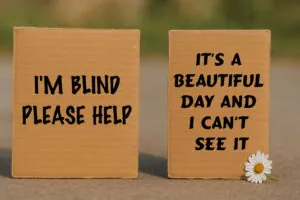

If you could summarize your desired approach to the coming year with just one word, what word would you use?

I believe that critical thinking is an important skill for any leader. Critical thinking supports both decision making and self-leadership. I’ve done some

Another Milestone In November of 2001, I launched my new consulting/practice. I had first rate training and some proven tools for helping organizations and

As purveyor of effective goal planning for over two decades, I am more aware than most folks about how goal setting is used and misused. When I recently discovered the term “Anti-Goals”, my curiosity peaked. Is this backlash for pursing goals?
I’ve discovered and documented some really good reasons for people to sour on the idea of goal setting. Here are three examples of how and when using goal setting as a leadership tool can fail.

While our food favorites may vary, we all have them. And we tend to choose them more often than our less favorable choices. Our food decision making can provide clues to our workday decision making. Let’s take a closer look.

In an article dated September 8, 2021 by business rating site Kev’s Best, correspondent Shera Elliott compiled a list of the 5 Best Executive Leadership Coaching firms serving the Chicago Area.

Most citizens of the world have experienced two of the most disruptive two years we can remember. The result is the proliferation of FUD: Fear, Uncertainty and Doubt. In the presence of FUD, it’s all too easy to become self absorbed with our own challenges. And thereby easy to dismiss those of others.
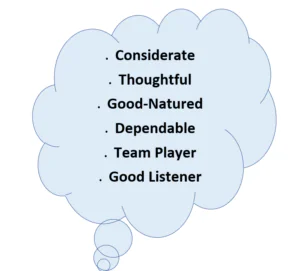
Part 2 of 2 This post is the follow up to Extroverts Leading Introverts which explored the reverse scenario. How Much of An Introvert
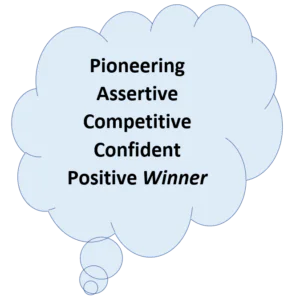
On a scale of 1 to 10, how would you rate your level of extroversion?
If you gave yourself an extrovert rating of 7 or higher…
* You are more likely than most to experience conflict when interacting with the more introverted people in your workplace
* To effectively lead these folks, you will be more effective by adapting your approach.

I once had a new coaching client begin our engagement with this intriguing request. “I don’t want this to get touchy-feely.”
On the surface, this is a potential challenge for a leadership coach. One of the most important aspects of a coach-client relationship is connection. Does connection require getting touchy-feely? It depends on what that term really means to the person making request. There are similarities between a coach’s role and a leader’s role. So let’s take a closer look at the possible rewards and consequences with a touchy-feely approach to communication.


We all have our mental barriers. Our limiting beliefs that create the perception that certain tasks are too hard. As long as we harbor those beliefs, they will hold us back from pursuing goals with conviction.

I don’t usually write posts that are overly personal or promotional. But this seemed like an appropriate time to bend my own rules. A Once-in-a-Lifetime

What are your Limiting Beliefs about Executive Coaching? As a coach, part of my role is to help others to discover and overcome their limiting

Being a judgmental leader is like using a sledgehammer to crack a nut – it’s destructive and totally unnecessary. Constant criticism and belittling from a leader create a pressure cooker environment that will eventually blow the lid off your team’s productivity and job satisfaction.
Not only that, but being overly judgmental can discourage your team from making decisions and taking initiative which can lead to a stagnant organization. Low morale, high turnover rates, and poor communication and teamwork are all signs of a toxic leadership style.

Asking questions and actively listening to the answers is a valuable communication skill that can help us understand others better, build stronger relationships, and even
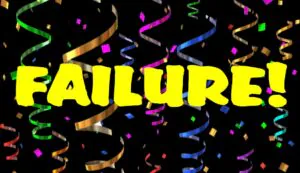
What Kind of Question is This?
We can agree that it’s provocative. When is failure ever the goal? So why should we ever want to encourage or reward it? What might happen if you actually did reward failure?