

We use cookies to improve your experience on our site.
By using our website, you agree to our use of cookies. Find out more information on how we use cookies, view our privacy policy.

When I first heard the term Stakeholder Management, I had mixed reactions.
Stakeholder management is typically defined as the process of organizing, monitoring, and improving relationships with stakeholders. It often includes identifying who they are, understanding their expectations, and creating plans to engage them.
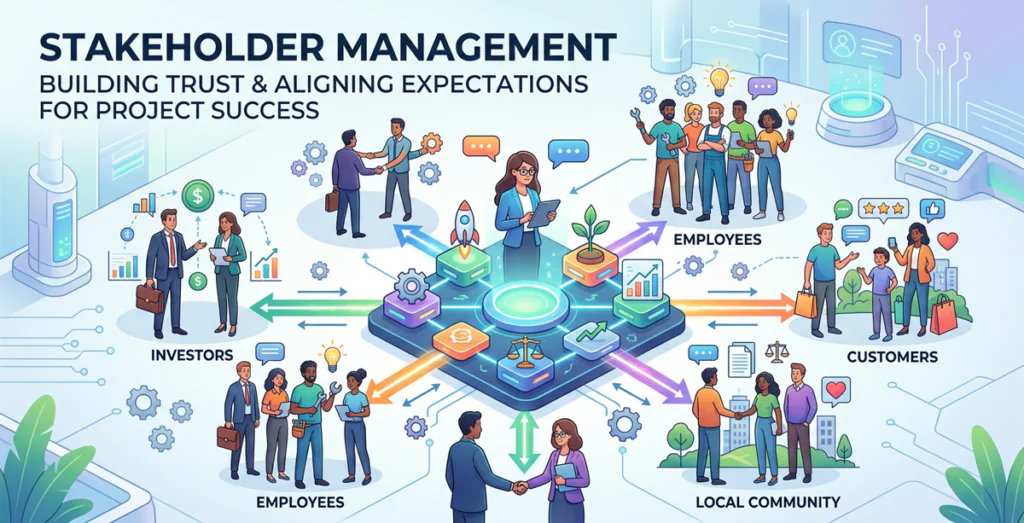
That all sounds reasonable. But pause for a moment. Who are your stakeholders? Not in theory. In your actual role. Your boss is an obvious one. Your direct reports, certainly. Peers across the organization. Customers. Partners. Vendors. Maybe even your board. But who else? Who can influence your success? Or, be impacted by your decisions? And just as important, whose needs do you tend to overlook?
Most leaders can list their stakeholders when asked. Fewer have really stepped back to consider them.
There are times when management is appropriate. Projects with deadlines. Competing priorities. Limited resources. Situations where alignment is required and time is short. In those moments, structure helps. Clarity helps. Following up, tracking commitments, making sure expectations are met… that’s part of the job. No issue there. But here’s where it gets interesting.
What happens when the situation isn’t a project… but an ongoing relationship?
What happens when the stakeholder isn’t a task to be coordinated… but a person whose support you need over time?
This is where many leaders get stuck without realizing it. They stay in “management mode” longer than the situation calls for. They communicate to inform. To update. To direct. But they don’t always communicate to understand. Or to influence. Or to align around something that actually matters.
So what might it look like to lead your stakeholders instead? It might start with a different question. Not “What do I need from them?” But “What matters to them?” Not “How do I keep them satisfied?” But “How do I engage them in a way that creates shared success?” There’s a subtle shift there. But it changes the conversation.
Most stakeholder challenges I see aren’t caused by poor intent. They’re caused by incomplete awareness. A leader moves forward with a decision that makes perfect sense to them… only to encounter resistance they didn’t anticipate. Or silence. Or worse, quiet misalignment that shows up later.
And when that happens, the instinct is often to double down. To push harder. To “manage” more tightly. But what if the issue isn’t execution? What if it’s perspective? What might change if you had a clearer view of what each stakeholder values… how they define success… and what concerns they may not be voicing?
When leaders expand their awareness of stakeholders, something shifts. Conversations become more targeted. Buy-in becomes easier to earn, not because you’re persuading harder, but because you’re connecting more effectively. Decisions land with less friction. And perhaps most importantly, trust builds. Not the kind of trust that comes from delivering a single result. But the kind that comes from people feeling seen, heard, and considered. That’s not something you manage. That’s something you lead.
So here’s something to consider.
By using our website, you agree to our use of cookies. Find out more information on how we use cookies, view our privacy policy.