We use cookies to improve your experience on our site.
By using our website, you agree to our use of cookies. Find out more information on how we use cookies, view our privacy policy.




From the title of this article, you might assume that I’m an expert on fashion. I’m definitely not. The advice here is based on my understanding of how different types of people make decisions. From that, I believe I can help you to more effectively dress for success.
 Snap Judgments
We all know the old saying:
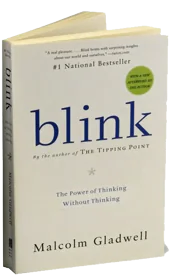
If it were true that people don’t make snap judgments based on appearances, we would see some very bland book covers. The fact is, we all do it with both books and people.
Malcolm Gladwell’s “Blink” offers fascinating validation for how humans can and do make rapid, instinctive judgements and decisions based on appearances. And with a solid frame-of-reference, snap decisions can be surprisingly accurate.
It’s to get people interested in the book. Pick it up. Learn more. Buy the book.
 Like a book cover, your attire, appearance and demeanor are forms of non-verbal communication. What message is your appearance sending? What does it say about your…
What messages are you sending? How consistent are they?
 I believe that, each day, you should dress to the level of the most important person that you expect to meet. This belief is based on these time-tested concepts:
People will offer subtle clues that you can use to effectively adjust your appearance. When it comes to judging apparel, folks are wired differently. Some have a strong value for beauty and form that effects both their own dress habits and the way they view others. They have what we call a “high aesthetic” drive and place a high value on appearance and other sensory things. Others are indifferent to fashion and color schemes. Ideally these people have some help at home that will occasionally ask the semi-rhetorical question:
“You’re wearing that?!?”
For me, that typically triggers a hasty wardrobe change. If you’re even slightly aesthetically challenged, be aware that you could be judged by others with a different value system when it comes to fashion and neatness. It can help to have the preemptive fashion police on your side. Their advice can serve to prevent you from sending the wrong visual message.
Some people are more rule oriented and traditional and will therefore honor dress code traditions at high end establishments like upscale restaurants, conferences and offices. Others? Not so much. Know your audience for this non-verbal communication and make sure your visual is on-purpose.
With the onset of “corporate casual” attire some marketing departments established a trade show team look with matching polo shirts and khakis for their trade show teams. For the above reasons, this can be a blunder. What happens when a C-level executive in formal business attire visits your exhibit? In that situation, your team attired representative is on uneven footing. The transaction is slanted in favor of the better dressed person. A business suit trumps the khakis in that environment. Do you really want to start a business meeting after being trumped? Why take the risk?
Attempting to put everyone under one appearance umbrella is a mistake. So it is important to do your homework on both the people you interact with and the cultures in which they live and work. Adjust your visual messaging accordingly.