


We use cookies to improve your experience on our site.
By using our website, you agree to our use of cookies. Find out more information on how we use cookies, view our privacy policy.

What do I seek when I send a text? Am I trying to connect? Or merely to be heard?
*Have I ever felt closer or more distant after a message thread?
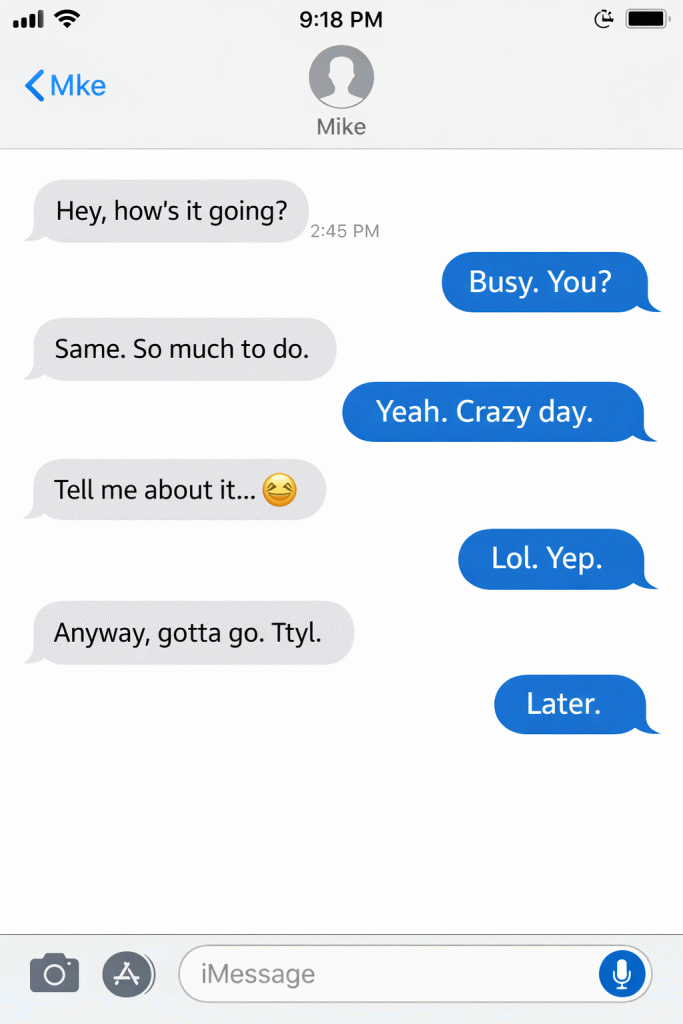
Texting is only one example of how we habitually choose High Tech and High Task over High Touch in our important interactions.
There’s a paradox. In an age of unprecedented access, the richest exchanges aren’t happening in texts, emojis, or threaded replies. They happen when we risk vulnerability, nuance, silence, and presence, the very things that stripped-down digital tools can’t deliver.
Sherry Turkle, who has studied this evolution deeply, put it this way:
“We’re “connected, but alone.”
We carry devices that promise constant access to others, but these same tools subtly teach us to avoid the messiness of real-time interaction, the pauses, the eye contact, the unedited responses that reveal who we are to one another.
When was the last time a text truly deepened a relationship?
What emotions get lost between typed words and sent messages?
How often do we choose efficiency over endeavor — replying fast instead of listening fully?
If human connection is messy and unpredictable, what does our preference for controlled communication reveal about us?
Here’s the underlying thought: texting and once-removed communication aren’t simply neutral tools. They shape our expectations of one another — and of ourselves. They offer control and polish at the expense of vulnerability and presence. That’s not always bad on its face, but it does change what connection feels like, and what it takes to achieve it.
Jeremy Boone is an accomplished coach who helps athletes and athletic teams achieve higher levels of performance. We share the same assessment tools.
His TED Talk on Connection is both a potential mindset changer and a game changer.
This week, notice when you reach for a screen instead of a face. When you’d rather edit a message than risk a real conversation. And then ask,
That’s where the real leadership breakthrough happens, not in mastering new tech, but in mastering the courage to connect beyond it.
In the video, he contrasts empathy and compassion. And suggests two self-leadership questions to develop your sense of compassion:
Before any important interaction, ask yourself…
A shift in mindset from “What can I get?” to “What can I give?”

This week, notice when you reach for a screen instead of a face. When you’d rather edit a message than risk a real conversation. And then ask,
That’s where the real leadership breakthrough happens, not in mastering new tech, but in mastering the courage to connect beyond it.
By using our website, you agree to our use of cookies. Find out more information on how we use cookies, view our privacy policy.