

We use cookies to improve your experience on our site.
By using our website, you agree to our use of cookies. Find out more information on how we use cookies, view our privacy policy.

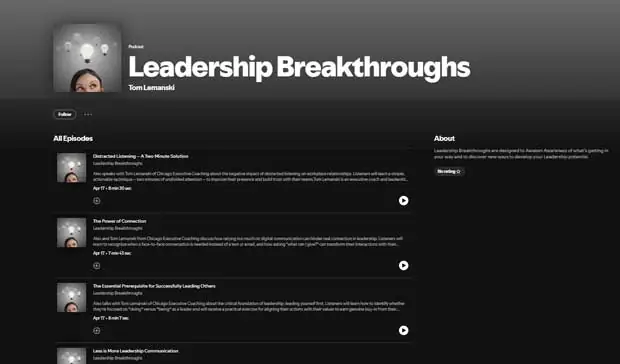
In April, I was approached by a developer who created a ‘pilot’ podcast episode based on a recent blog post. It was a deeper dive discussion between me (my cloned voice) and an artificial partner. I was impressed with the content and the speed of the content production. So, I agreed to try this automated approach to content development and create several initial episodes. My developer believed in the importance of publishing numerous episodes quickly for building a following.
The developer went to work and quickly produced and published five podcasts. I shared with people who know me. They objected to the voice clone. It resembled my voice but was obviously fake. As I listened and reviewed the content of each, I discovered phrases that I would never say. These were corrected and republished. A reminder that Haste Makes Waste.
Three more episodes were generated.
In the process, the developer created and published podcast content without offering me an opportunity to edit.
I believe that integrity and authenticity are critical components of our personal brands. In the absence of these, what are we really achieving?
The source of the first podcast episode was based on my post, The Power of Connection. It discussed the importance of High Touch Leadership. I believe that the additional podcast content has real value. BUT, I believe that authenticity is an essential leadership trait. When listening to my artificial voice engaged in an artificial discussion, an ethical alarm went off. As an advocate for the importance of authenticity in leadership communication, should I really be using an obviously artificial voice?
I am also an advocate for Smart Brevity. I know that my audience appreciates this. brevity. Ironically, my post about Smart Brevity now includes a 7-minute podcast. It does allow you an option to go deeper. But the ambiguity bothers me.
Artificial Intelligence is not going away. In many ways, it can improve efficiency, accelerate research, organize ideas, and even help us communicate more clearly. I use it myself. You are reading this post on a blog where AI has become part of my own learning process.
But leadership communication is not merely the transfer of information. It is the transfer of intent, belief, trust, judgment, and humanity. That is where the line between artificial and authentic begins to matter.
As leaders, we now face communication decisions that previous generations never had to consider. Just because technology allows us to automate something does not automatically mean we should. At what point does convenience begin to erode credibility? When does polished become artificial? When does efficiency begin replacing connection?
And perhaps the bigger question:
I believe the future leadership advantage may not belong to those who use the most AI. It may belong to those who use it thoughtfully while protecting what should never become artificial in the first place.
In the years ahead, leaders will face growing pressure to communicate faster, publish more content, respond instantly, and scale their influence through technology.
The temptation will be obvious: Why spend an hour crafting a message when AI can create one in 30 seconds? But influence has never been built solely on speed. People follow leaders they believe. People trust leaders who sound real. People connect with leaders who demonstrate humanity, vulnerability, and conviction. As AI-generated communication becomes more common, authentic communication may actually become more valuable.
Ironically, in a world filled with artificial voices, authentic leadership could become the rarest and most valued voice in the room.
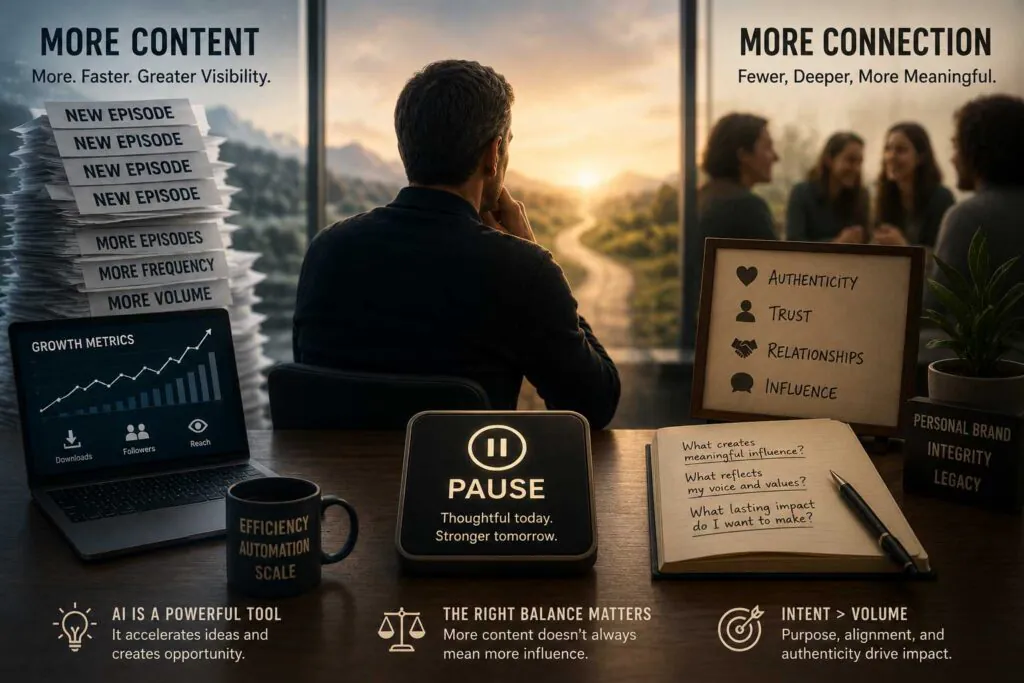
After the initial month, my developer wanted to continue producing and publishing multiple podcast episodes each month. From a growth perspective, I understood the logic. More content. More frequency. More visibility.
But I decided to press the pause button. Not because I believe Artificial Intelligence has no value. Quite the opposite. I believe these tools can accelerate idea development, increase efficiency, and create opportunities that did not exist even a year ago. What concerned me was something different. I was beginning to sense a gap between content production and authentic representation. The “more is more” approach felt inconsistent with the personal brand and leadership philosophy I have spent over two decades building. I was also unclear on the true return on investment. Was this creating meaningful influence… or simply creating more content? Those are not the same thing.
If those concerns can be resolved thoughtfully, I would consider revisiting the project. But for now, slowing down felt more aligned than speeding up.
With the podcast paused, my alternative experiment is providing an audio version of the blog post. Audio-oriented people in my audience can listen to this and future posts by clicking or tapping the play icon at the top of the page. The audio is not in my voice and does not pretend to be. The AI tools efficiently generate a reasonable representation of the written content while making it easier for some to consume.
To exercise my own critical thinking muscles:
Stay tuned.
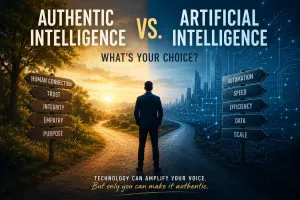
Perhaps this is the real leadership challenge moving forward. Not whether we use Artificial Intelligence. But whether we apply Authentic Intelligence while using it. As leaders, we will increasingly face decisions involving speed, scale, convenience, automation, and influence. Some of those tools will create enormous value. Some may quietly erode trust, credibility, and connection if we stop thinking critically about how and why we use them.
Those questions matter more than the technology itself.
By using our website, you agree to our use of cookies. Find out more information on how we use cookies, view our privacy policy.