A Simple, “Less is More” Approach to Dedicate Yourself to What’s Important in the New Year
If you could summarize your desired approach to the coming year with just one word, what word would you use?
Below you’ll find a list of All 200+ Leadership Breakthroughs Posts From Newest to Oldest
You can also view the complete post listing in text only format.

If you could summarize your desired approach to the coming year with just one word, what word would you use?

I believe that critical thinking is an important skill for any leader. Critical thinking supports both decision making and

Another Milestone In November of 2001, I launched my new consulting/practice. I had first rate training and some proven tools
As purveyor of effective goal planning for over two decades, I am more aware than most folks about how goal setting is used and misused. When I recently discovered the term “Anti-Goals”, my curiosity peaked. Is this backlash for pursing goals?
I’ve discovered and documented some really good reasons for people to sour on the idea of goal setting. Here are three examples of how and when using goal setting as a leadership tool can fail.

While our food favorites may vary, we all have them. And we tend to choose them more often than our less favorable choices. Our food decision making can provide clues to our workday decision making. Let’s take a closer look.

In an article dated September 8, 2021 by business rating site Kev’s Best, correspondent Shera Elliott compiled a list of the 5 Best Executive Leadership Coaching firms serving the Chicago Area.

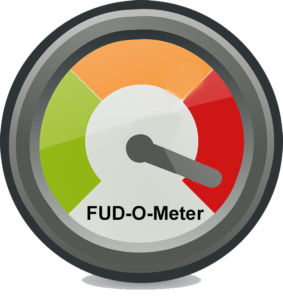
Most citizens of the world have experienced two of the most disruptive two years we can remember. The result is the proliferation of FUD: Fear, Uncertainty and Doubt. In the presence of FUD, it’s all too easy to become self absorbed with our own challenges. And thereby easy to dismiss those of others.

Part 2 of 2 This post is the follow up to Extroverts Leading Introverts which explored the reverse scenario. How

On a scale of 1 to 10, how would you rate your level of extroversion?
If you gave yourself an extrovert rating of 7 or higher…
* You are more likely than most to experience conflict when interacting with the more introverted people in your workplace
* To effectively lead these folks, you will be more effective by adapting your approach.

I once had a new coaching client begin our engagement with this intriguing request. “I don’t want this to get touchy-feely.”
On the surface, this is a potential challenge for a leadership coach. One of the most important aspects of a coach-client relationship is connection. Does connection require getting touchy-feely? It depends on what that term really means to the person making request. There are similarities between a coach’s role and a leader’s role. So let’s take a closer look at the possible rewards and consequences with a touchy-feely approach to communication.

We likely agree that integrity is a critical leadership trait. With your reputation on the line, I would argue that a leader’s integrity is so important that it needs to be defended whenever it’s threatened or challenged. As a leader, your integrity is judged on your ability to both make and keep your promises.

My 2020 Lemonade: I’m extremely fortunate. I would describe the year as an opportunistic adventure. My friends and family have stayed healthy and safe. I know I’m in the minority when I share that I’ve had a really great year. I’m aware of my fortuitous status. So I’m compelled to share my recipe for 2020 lemonade.

While it may be true that you shouldn’t judge a book by its cover. The truth is that we not only judge books, we also judge people. It may seem superficial, but we all make snap judgements based on experiences, sights and sounds. When you show up for a virtual meeting, you’re being judged by your non verbal communication. If you want others to respect your ideas, you need to look and sound like a person worthy of that respect.

Without warning, the events of 2020 challenged our resiliency. We’ve all temporarily lost much of life that we took for granted. Then we discovered the temporary conditions would longer than expected to go away. This required us to summon even more resiliency. The challenge intensified. How do we get more resiliency? The answer lies in the celebration of Thanksgiving.

On Thursday October 29, 2020 I became a Hall of Famer in my field. At the Fall Power Summit for The Trusted Advisors Network, I was inducted into their Hall of Fame.

When it comes to effective decision making, there’s no substitute for being informed. At the same time, we’re living in the information age. We’re more likely to have too much data than too little. What’s a leader to do to discover what’s really going on? I have eight recommendations including a simple magic word.

A check is a promise to pay. The banks hold you to your promise and enforce strict consequences for insufficient funds including bounced/returned checks, overdraft fees or even closing your account. What about your other promises?

What are “Triggers”?
There’s no denying it. We all have events that can lead to a reaction. In psychology a trigger is a stimulus; a reminder of a past experience strong enough to generate a reaction. It can be sensory; smell, a sound, an image or just familiar words. When stimulation action occurs with potential for unintended consequences.

Who would have thought that so simple as staying at home could be so challenging? Have you become uncomfortable with being comfortable?
Or have you become too comfortable? Perhaps feeling guilty about what’s not getting done?

Many of us suddenly have more time. Time is the scarcest of all resources. Count your blessings, assuming you’re healthy. We all realize that the future will be different. How? We can’t be certain. But there are degrees of uncertainty. Leaders are not completely in the dark. We’re getting plenty of clues about what lies ahead. Here are some examples:

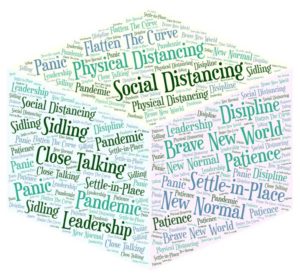
Wordsmith-ing The Brave New World: Our vocabularies have evolved. But some of the new words and phrases can be misleading or inaccurate. What words might we use instead?

Have you had experienced any pandemic related feelings of fear, anxiety or doubt lately? Let’s learn how emotional intelligence will help you cope.

Which is more important:
● The WORDS you say?
OR…
● HOW you say them?
My answer: It depends!

As you seek to become more of a leader and less a manager, how will your conversations need to change? You will need to speak less of what needs to be done and how to do it. Instead, speak more about why. In the words of acclaimed author and executive coach Marshall Goldsmith:
“What Got You Here, Won’t Get You There”

Gaining Proficiency: Our days are filled with countless routine tasks and activities that we successfully complete with little thought and low awareness. After lots of repetition, we can become so proficient, we’re able to simply “go because we know.” Your proficiency only happens after repetitive practice.
What are some new skills or behaviors you’d like to develop? Have you considered what’s involved in getting to the point where you’ve truly become proficient? The Law of Proficiency applies to every skill you’ve developed. And every one you’ll need or want to have.

I believe that as you improve the quality of the questions that you ask yourself, you improve the quality of your life. So when I found these quality questions about the new year, I was moved to share them here.

Enhance your attitude of gratitude with this emotionally charged video message. You’ll find it both timeless and timely.

Let’s briefly explore the lingering question:
How do I get more appreciation?
If you think about it, it’s a selfish question. Finding the answer requires an unselfish approach.

If we believe that manager’s role is defined by telling their people what to do, agreement is not required. Compliance is required. How do we develop influencing skills that go beyond demanding blind compliance? Is there a quick fix?

Let’s agree that our ability to effectively convey our personal feelings at the right time and place is important for building relationships and influencing others. Consider your current level of interpersonal skills.
How would you rate your ability to convey or express sympathy, empathy and compassion?
It’s great whenever we give or get one of these. Who doesn’t like getting one of these? But: What does this gesture really mean?

My Best from HBR’s 10 Must Reads on Leadership – The Crucibles of Leadership –
This section, written by Warren Bennis and Robert J. Thomas, recounts mentoring relationships. The story that struck me featured entrepreneur Michael Klein.

Receive an email update whenever a new post is published Simply… Scroll down to the COMMENTS box just below Leave

In January of 2014 I published Just Because You Can Doesn’t Mean You Should. Now that I’m four years older and wiser, I’ve discovered the depth of these 8 simple words. I’m compelled to share more insight into this simple phrase. You can apply this to the decisions that you make. And to guide the folks you lead in making theirs.

Based on page view stats for 2018, here are our readers’ favorites for the year. In case you missed them, here’s your chance to join the party!

Think back to your childhood. How many times did you complain to your mother that someone called you an unflattering name? And what was your mother’s response? Sticks and stones will break your bones. But names will never harm me you. According to Wikipedia, that rhyme dates back to 1830. It was a way that our elders delivered a very empowering lesson. We have the ability to choose our attitude. Words can only harm you if you allow them. You get to decide whether or not you’re affected.
By using our website, you agree to our use of cookies. Find out more information on how we use cookies, view our privacy policy.